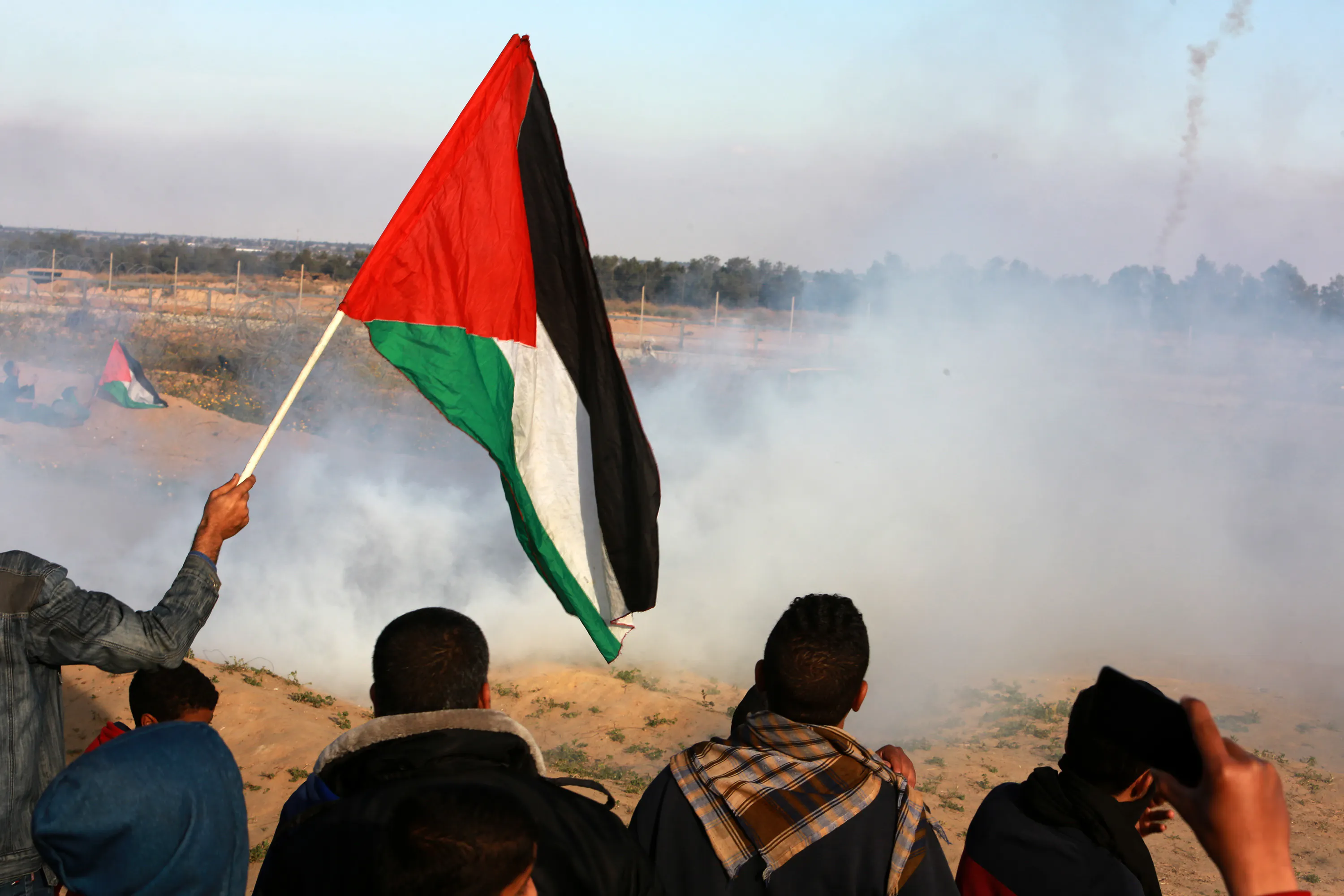
Working Under
Israeli Occupation:
The Daily Realities of Defending Human Rights in Palestine
Written by Husein Sholi, Synergy for Justice Palestine Country Representative
In early 2025, Synergy expanded its work into Palestine and established partnerships with judicial officials and civil society organisations to support human rights, combat stigma related to sexual violence, and strengthen efforts to document human rights violations. The work is meaningful, but serving as a representative for Synergy for Justice while operating under the control and constraints of the Israeli occupation is no easy task.
As Synergy’s representative, I am coordinating various activities, including training judicial and public prosecution officials on combating stigma in Palestine’s justice processes, particularly those handling criminal cases of violence against women. Every day, I am anticipating, planning for, and mitigating challenges related to the reality of living under the Israeli occupation and its apartheid system of control.
One of the key activities where we had to navigate these challenges was a workshop we held in Istanbul in January 2026, that was attended by five judges and six public prosecutors. During the logistical preparations and the process of finalising the agenda and nominees, we encountered significant complications caused by Israeli occupation restrictions on movement. This forced us to postpone meetings repeatedly—sometimes due to the Israeli army closing dozens of military checkpoints at the entrances to cities and villages on security grounds, at other times due to settler violence against Palestinian civilians, and at others due to the closure of Palestinian facilities in mourning for the deaths of Palestinian civilians. Each day brought a new, unexpected measure that prevented us from meeting and disrupted our arrangements.
As part of the mitigation efforts, we organised preliminary online meetings to brief participants on the agenda and objectives. We held extensive discussions to schedule times that would accommodate judges and public prosecutors—who agreed to hold the sessions in the evening but could not guarantee their arrival time at home due to Israeli restrictions on movement.
Furthermore, we were compelled to postpone the Istanbul workshop from October 2025 to January 2026 due to the complex security and military situation in Palestine and the region. Conditions were rapidly deteriorating amidst the war on Gaza and Israeli threats to strike Iran. In November 2025, the Palestinian government issued a decision banning public sector employees from traveling due to frequent border closures and the risk of sudden shutdowns. Such closures would have necessitated securing hotel accommodations for staff, creating a financial and logistical burden the government could not shoulder, given its ongoing inability to cover salaries and budgets resulting from Israel’s withholding of collected tax revenues.
Once the official restrictions were lifted, we rescheduled the workshop for January 2026. To ensure everything went smoothly, we coordinated with service and transport companies across Palestine, Jordan, and Türkiye. Needless to say, using such services adds costs to programmes that are already under-resourced. Throughout the journey, we anxiously anticipated potential delays at the bridge connecting Jordan and Palestine—delays that could cause us to miss our flight to Türkiye.
Throughout the workshop days in Istanbul, thoughts of the return journey were constantly on our minds, fueled by circulating rumors and news regarding the potential escalation of regional tensions—specifically the risk of an Israeli attack on Iran and the subsequent closure of borders. During the course, one participant received a call from her young daughter, who was stranded at an Israeli military checkpoint. The mother was thrown into a state of panic and forced to stay on the phone with her daughter for an extended period, offering support and guidance to ensure her safety until the crisis passed and the daughter arrived home safely. Despite these tensions, we continued to carry out the intensive programme with high engagement from the participants. After the conclusion of the workshop, we departed at dawn the following day for Amman, continuing by bus to the bridge, then to the Israeli checkpoint, and finally into Palestinian territory. Many stories from our daily reality mirror this experience.
In January 2026, we also established a partnership with the Women’s Centre for Legal Aid and Counselling in Ramallah to address stigma related to sexual violence in justice processes. The project includes various activities with members of protection networks, who serve as first responders to cases of violence against women, and defense lawyers, as well as documenting cases of sexual violence and conducting advocacy initiatives.
Here, too, we face persistent delays and disruptions to the timely implementation of activities due to obstacles on the ground imposed by the Israeli occupation. Restricting the movement of project participants and preventing them from traveling freely between the various governorates and Ramallah remains a constant burden for us and for those implementing the project. Recently, we have also faced incursions of Israeli occupation vehicles into Palestinian Authority areas during daylight hours. This compels us to immediately cancel activities and leave training venues to ensure the participants' safety, forcing us to seek temporary solutions or devise contingency plans to keep the work moving forward.
Between April and June of this year, when I was conducting training for the Women’s Center staff on stigma in justice systems, we were forced to postpone to the following week several times because the staff were unable to reach the center, or because of my inability to return to Ramallah from my weekly visit to my mother’s house in the Nablus area, due to military checkpoints and settler violence.
Working to support human rights, particularly in a country that is under a settler-colonial occupation, is a mission to spread and promote noble and fundamental human values. Working alongside an international team and distinguished local partners who share the same commitment to upholding human dignity sustains our hope and determination to persevere, no matter how great the challenges.